Weaving solidarity: the story behind the International Homeless Tartan

Courtesy of Slanj
By Calum Grant, Slanj
- Street paper news
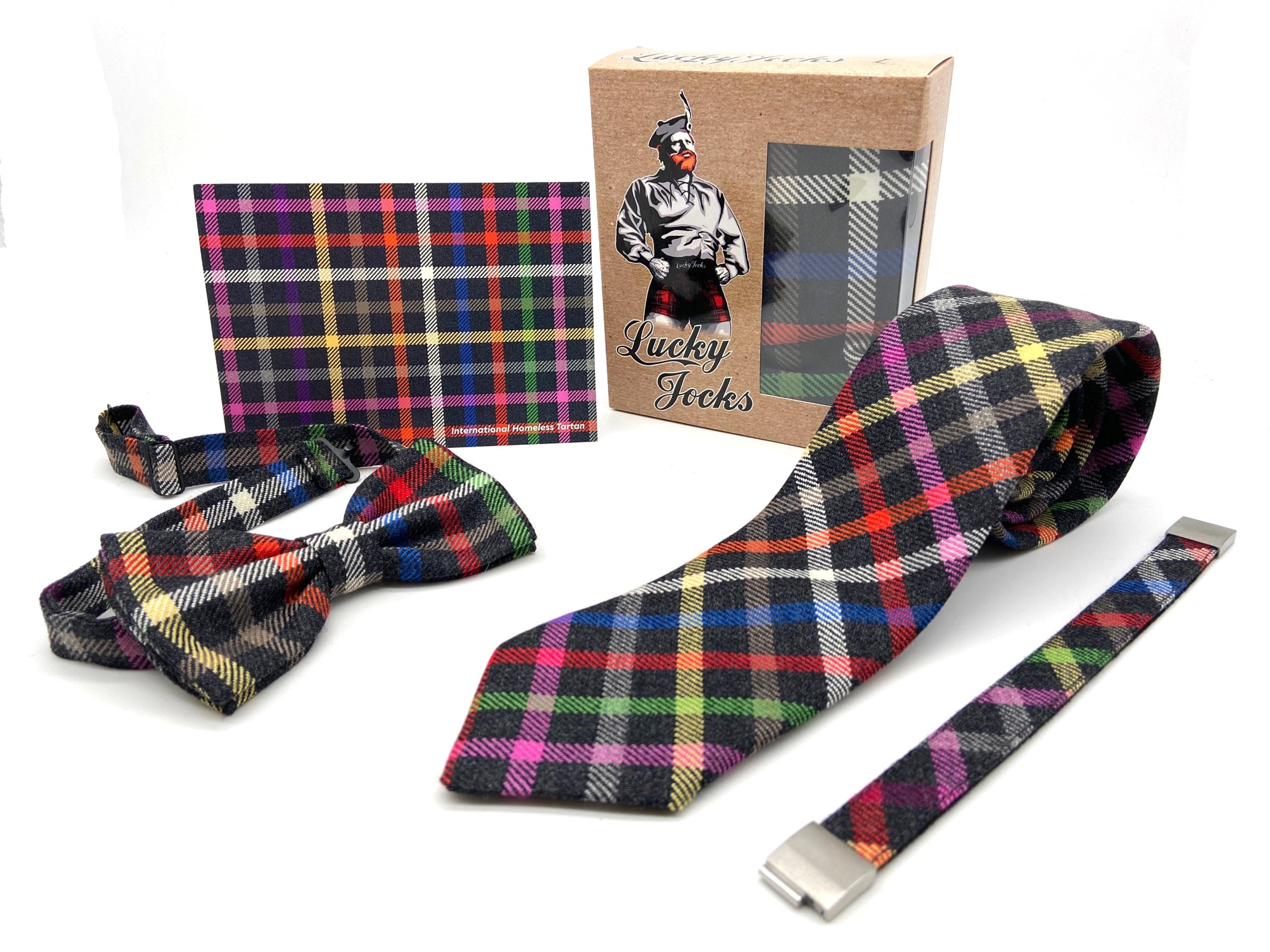
When Slanj launched the Homeless Tartan in 2019, it began with a simple idea rooted in a growing crisis. With one in 200 people in the UK experiencing homelessness, we wanted to use what we knew best: tartan design. The aim was to raise awareness and support frontline organisations.
The pattern struck a chord with the public and went on to raise more than £40,000 for Shelter Scotland. During the pandemic, Homeless Tartan masks became a familiar sight and offered people a way to show solidarity at a time when many were struggling.
The idea is now expanding beyond Scotland. The new International Homeless Tartan will support the International Network of Street Papers (INSP), whose global movement empowers thousands of people experiencing homelessness to earn an income, build confidence and connect with their communities. It feels like a natural progression from a national initiative to a worldwide one.
The International Homeless Tartan has colourful lines, like the original design, but the background has changed from light grey to a deeper charcoal. The darker base makes the tartan more wearable for kilts, trousers and everyday clothing, and gives the pattern more contrast.
Tartan itself is recognised across the world. It carries an immediate sense of identity and belonging, no matter where it is seen. That universal recognition makes it a powerful medium for a cause that reaches across borders.
For me, this project is about more than creating a pattern. It is about responsibility and representation. Tartan is so strongly linked to Scotland that I feel a duty to ensure it represents this country in a positive way. Scotland is a welcoming, caring place, and if tartan can help to reflect that and be a vehicle for good, then that is a beautiful thing.
This belief has shaped Slanj’s work for many years. We have created tartans supporting the Refugee Council, Beatson Cancer Charity and Scottish Action for Mental Health (SAMH). Each pattern links identity and belonging to a cause. It turns a traditional textile into a force for good.
The Homeless Tartan was one of the clearest expressions of that idea. Its success during lockdown showed how tartan can adapt to the moment while still carrying a message.
Slanj’s relationship with street papers goes back many years. The Big Issue is a fantastic initiative that we have supported though advertising and more recently through making tartan products for them, which are available in their online store.
The partnership with INSP builds on this history. Street papers offer more than income. They provide dignity, structure and community for people experiencing homelessness. Supporting INSP means strengthening a global network of vendors whose stories often go unheard.
We are delighted to say that the International Homeless Tartan launched on Monday 6April 2026, which just so happens to be Tartan Day. The full range of products are available on slanjkilts.com, and 20 per cent of every sale will go directly to INSP. The hope is to match, or even surpass, the impact of the original Homeless Tartan.
For Slanj, this project is both a continuation and an expansion. It honours Scotland’s heritage while contributing to a global movement for social justice. It shows that tartan is not only a tradition or a fashion statement; it can also be a vehicle for good that carries the values of identity, belonging and compassion.
When woven with purpose, it becomes more than fabric. It becomes a message that Scotland is proud to share with the world.
You may also be interested in...

Q&A: How The Big Issue Australia is empowering women through enterprise
Read more

Street Sense Media vendors stage play exploring solutions to homelessness
Read more