Can INSP’s journalism academy change the narrative on homelessness in the media?
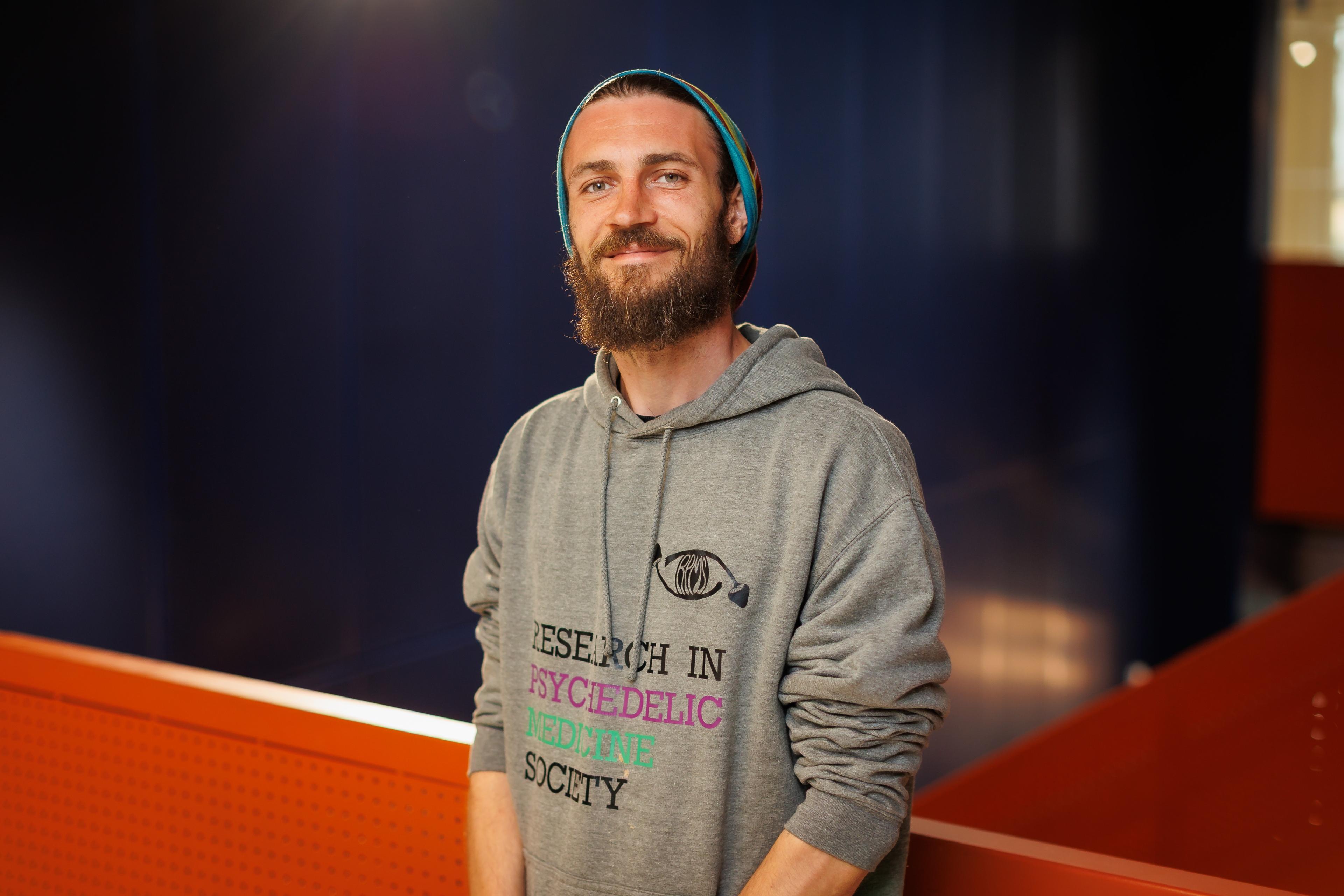

Photo by Jack Donaghy
By Sam McEvans
- Street paper news
“If you look at the way the media reports on homelessness, it’s always with the same stigmatising images of a guy sitting with a cup begging.” James Stampfer, who has experienced homelessness, reflects on his perceptions of the media after completing INSP’s new journalism course in Glasgow, the Changing the Narrative Journalism Training Academy.
“This is the way things are always framed, that it’s caused by individual bad decisions. It skirts over the issue, which is essentially class and inequality,” he adds.
The academy’s goal is to introduce people with lived experience of homelessness to an education in the media and help to combat the often-negative portrayal of marginalised groups in the press.
James, an Impact Lead at Homeless Network Scotland, says that the media can improve itself by resisting the harmful use of “misery” and stereotypes to sell stories. “People with no experience of the issues they’re reporting on can struggle to write accurately and respectfully. Today, this goes beyond traditional media into the social media influencer culture as well.”
A study of 820 articles about homelessness found that sources with lived experience were missing from 60 per cent of coverage, while in 92 per cent of cases, third-party experts were given greater prominence.
James recalls a TV interview at a rehab centre where the anchor kept pausing the interview to push him for gorier details. “You’ve come down to a rehab, a place of hope, and you’re not looking for any hope,” he told the reporter. “I think you need to look at the way that you’re approaching your journalism.”
At launch, the INSP’s journalism academy involved two 10-week learning programmes that included workshops on topics like news reporting, privacy, and AI.
As recorded in INSP’s impact report, 15 participants completed the course and were published through the INSP News Service and in a newly created newspaper, The New Narrative.
Topics spanned from mental health and LGBTQ+ rights to psychedelics and water shortages.
A local college representative presented to the group about NCTJ qualifications and one person successfully applied to study for a diploma.
HG, a journalist with direct experience of homelessness, says that courses like this can be “a great first step between homelessness and a journalism career.”
But the Canary reporter cautions that “the course alone probably won't lead to a paid job in the industry” due to a major barrier that persists for people from lower income or homelessness backgrounds: unpaid internships. “If industry internships were paid properly, I think that would change things massively.”
Currently, only 12% of journalists in the UK come from working class backgrounds. HG says that this creates an “echo chamber of privilege” in newsrooms. “As soon as you’re bringing people with different lived experiences, you get different perspectives. This allows you to write stories from alternative angles.”
Mike Findlay-Agnew, INSP CEO and academy founder, wants to see more people with lived experience of homelessness and poverty and from lower socioeconomic backgrounds getting into the profession. “If over time you change the face and the makeup of newsrooms, I believe that problematic narratives can change to become more accurate.”
But he hastens to add that the solution is more subtle than getting people with first-hand experience to report on homelessness. “It’s not as direct as that, or just about the media coverage,” he adds. “It’s how that can influence public attitudes and perceptions and therefore the way that people participate in politics and democracy longer term.”
Academy graduate Neil Smith says: “General society sees people experiencing homelessness as the lowest of the low, and as drug or alcohol users. They don't realise there are people on the streets for so many different reasons.”
He describes the academy as a judgement-free space. “A sort of embarrassment can come with homelessness,” he explains, but he adds that the sessions opened up “mental health doors and barriers” for people used to “keeping stuff to themselves.”
Neil is a tour guide for social enterprise Invisible Cities. “We’re based in Glasgow and are trying to make people aware of homelessness stuff, alcohol, drug issues, trauma, and abuse.”
Neil’s passion for storytelling shines through, and it’s clear that he enjoys honing his skills, whether it’s through writing tasks at the journalism academy or experimenting with the spoken word on his new crime and punishment tour.
“On the tours, I’m telling people a wee bit about the history of the city. Walking point to point, I’m talking about my life, where I was a couple of years ago through to what I’m doing now. I’m just trying to make people more aware.”
Next, Neil plans to take a radio skills course and to produce and host a new podcast.
Meanwhile, James is interviewing people and collecting data to give feedback to the council about the winter provisions in Glasgow.
The future of the Changing the Narrative Journalism Training Academy will hinge on additional grants and partnerships landing.
With additional funding, the project will expand into Edinburgh and Dundee in late 2026. INSP member organisations could also replicate the academy in other locations around the world.
Another goal is to engage major media organisations to offer INSP-led training for staff on solidarity journalism practices.
The academy organisers say that the Glasgow project could evolve into a community news centre, or even into a team of roving reporters that could create ongoing stories for the INSP News Service.
Neil is cautiously optimistic about the future and finding ways, and different media formats, to put a spotlight on homelessness and the lack of help in society. “Everybody says, ‘Let your voice be heard,’ but sometimes a single person’s voice doesn’t get heard. But if enough people come together with a good idea and a combined voice, you can be heard.
“The more people that listen, [the more] it’ll bring more awareness.”
You may also be interested in...


Q&A: How The Big Issue Australia is empowering women through enterprise
Read more

Street Sense Media vendors stage play exploring solutions to homelessness
Read more