Harm reduction: action over ideology
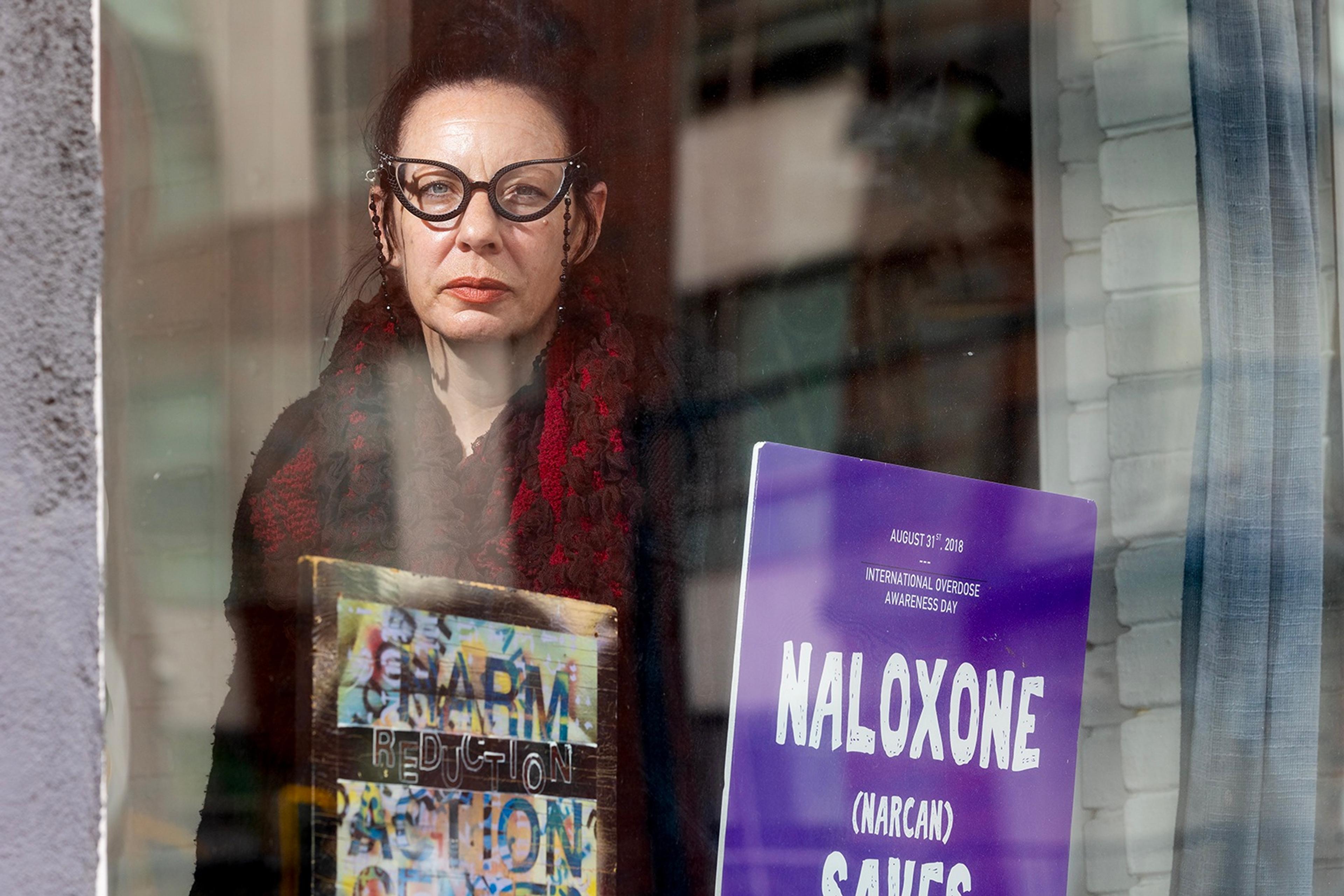

Photo by Giles Clasen
By Giles Clasen
- Lived experience


Ruth Kanatser’s morning routine began well before dawn.
Kanatser and her husband climbed out of their car at 3:30 most mornings, racing to the methadone clinic, then to the day labor dispatch before the best jobs were gone. Some days included 14 hours of hard labor before they searched for a safe place to park, got a few hours of sleep, then started all over.
That was Denver for those experiencing homelessness in the early 2000s.
Most days, Kanatser and her husband made just enough money to survive, never enough to get ahead. Complicating their efforts was a nagging need for heroin.
During those years, Kanatser depended on methadone to overcome withdrawal symptoms from heroin. Both the drug and the solution felt like a trap.
“When you’re using, you’re very quickly no longer getting high,” Kanatser said. “You start using just to avoid getting sick from withdrawal. The street-level heroin user, the person really struggling on a day-to-day basis, is just trying to stay out of withdrawal, to stay out of the hospital. Methadone can help, but it brings its own problems.”
Kanatser said that relying on methadone to overcome addiction was expensive and came with so many restrictions that working and earning her way out of homelessness was difficult.
“It’s not that it doesn’t help, it does, but the system under which it is administered is so overly parental, and just very gross,” Kanatser said. “When you take methadone, the clinic is in your life, you have no privacy, and they set the rules on when you come, when you go. It can be restrictive in a way that makes regular day-to-day life, like work and family, nearly impossible.”
On a good day, Kanatser and her husband would walk away from their temporary jobs with $80 between them.
Keeping the methadone prescription current also cost money: a lot of money. And it had to be paid before anything else, because it was the only thing that guaranteed that they could work the next day. They also set aside $35 each day for a dirty hotel on Colfax. If they had any money remaining, they bought food. Frequently, they went without.
“It was stressful all the time,” Kanatser said. “You never felt safe. Ever. Never ever.”
For nearly four years, they turned to hotel rooms when they could scrape together enough. They slept in their car when they couldn’t.
A proper apartment would have cost significantly less than hotels each month but getting into one required a payment up front for first and last month’s rent plus a security deposit. It was a threshold that kept moving just out of reach.
“We would always save up, get close to having a deposit, then something would go wrong, an emergency, and we were back to square one,” Kanatser said. “It was ridiculous; no matter how hard we worked or how hard we tried, we couldn’t move forward for years.”
Having a car helped. It meant that they could drive other day laborers to work sites for a few extra dollars and get to the casino jobs up in the mountains, which paid better than anything in the city. But living in an old car without money to maintain it is like counting on a time bomb that could undo all their hard work.
When the cable connecting the gas pedal to the engine snapped one night, stranding them miles from a safe place to sleep, they walked to buy the part and fixed it themselves in the dark with flashlights.
“My poor husband was on the ground underneath, and I’m in the car upside down in the dark with flashlights trying to thread this thing through,” she said. “I think we were there for I don’t know how many hours. Just desperate. But we didn’t have any other option. We didn’t have the money to get the car repaired, and it was our home. We had no choice. That was desperation.”
What finally broke the cycle wasn’t discipline or determination alone. Her husband’s parents gave them the cash to secure an apartment.
“It was $436. I remember that to this day,” she said. “It’s not a lot of money. But it was everything.”
Most people, she said, never find their $436 and never overcome homelessness or addiction, often dying on the street.
Today, Kanatser is the assistant director of the Harm Reduction Action Center (HRAC), a Denver-based organization that provides clean syringes, naloxone, fentanyl test strips, safer use supplies, and a range of support services to people who use drugs. Most importantly, HRAC offers the services without judgment.
Kanatser said that getting her first job with what would become the Harm Reduction Action Center was a matter of timing, exposure, and luck. Before she ever applied, she had encountered early harm reduction work through Urban Links and Denver Health’s REACH program. Those programs were the first places, she said, where anyone in healthcare saw past her substance use and treated her as if her life mattered.
“It was also the first place where anybody treated me like a human being,” she said. “Anybody said anything I had to say was valuable whatsoever, and that was mind-blowing.”
When a part-time outreach position opened at HRAC years ago, Kanatser nearly did not apply. She was unemployed, depressed, and convinced that more qualified people would get the job.
“I almost didn’t even interview for it,” she said. Kanatser’s mother pushed her to go to practice interviewing, if nothing else. She got the job, starting with 20 hours per week doing street outreach, and has been a fixture in Denver ever since.
The Harm Reduction Action Center emphasizes substance use awareness, focusing on fact-based education, safety, and dignity. HRAC does not require service users to pursue sobriety. Instead, the organization focuses on safety, and if a person wants to find treatment, the organization helps.
Since 2002, the Denver nonprofit has provided syringe access, naloxone, health education, and a consistent point of contact for people navigating drug use, homelessness, and an increasingly toxic drug supply.
For nearly 25 years, Kanatser has been sharing the organization’s philosophy, rooted in reducing the negative consequences of drug use rather than insisting that a person stop using before they deserve care, support, or safety.
Lisa Raville, the center’s executive director, said that harm reduction is both practical and familiar, even if the term remains politically charged.
“We use harm reduction in everything we do every day. Seatbelts, designated drivers - if you go out on a boat, you wear a life preserver. Hopefully you’re not in an accident, hopefully the boat doesn’t capsize, but if it does, you have that life preserver, that seatbelt to offset the risk. That’s all harm reduction,” Raville said.
“Life is inherently risky. What I like about harm reduction is it’s a true action item you can do today.”
According to Raville, syringe access programs allow people to properly dispose of used syringes and obtain sterile ones, reducing transmission of HIV and hepatitis C.
HRAC also hands out safer use kits that help to reduce some of the most serious dangers associated with drug use by providing sterile supplies, overdose reversal medication, and basic health items that can prevent infection, disease transmission, and death.
In 2012, HRAC began safe needle distribution and disposal.
At the time, the Colorado Department of Public Health and Environment reported that Denver County counted 533 active hepatitis C cases in state surveillance data. By 2022, the county recorded 281 new chronic hepatitis C diagnoses. The categories changed over time, so the comparison is not exact. Still, the overall picture is clear. Denver’s hepatitis C burden is lower now than it was when HRAC’s syringe access work began.
The organization also works to put naloxone in the hands of those most likely to witness an overdose. Narcan, the brand name for naloxone, is a medication that temporarily reverses an opioid overdose.
“People who use drugs are the true first responders in this overdose crisis; they need access to naloxone first and foremost,” Raville said.
Raville argued that harm reduction’s importance extends beyond individual health; it also improves public safety and responds to a crisis that punishment has failed to solve.
“We get more referrals to our program from the Denver Police Department than we do from all of the hospitals combined. Police participation shows harm reduction increases public safety right here in our community,” Raville said.
Kanatser added that the relatively low cost of harm reduction saves Denver millions in public health costs.
According to Kanatser, the need has only become more urgent as overdose deaths continue to hit Denver’s unhoused community. Elected officials have, in her view, swung the pendulum back toward criminalization and incarceration.
“Nobody will talk to anybody about drugs, what works, what keeps people alive. They will never tell the truth about it. Politicians like to focus on ‘Just say no.’ They like to blame the individual. Arrests look like action. But arrests make substance use more dangerous and more difficult to overcome,” Kanatser said.
She added that if a person is afraid of an arrest, they are less likely to call for help or ask for help. It drives substance use underground.
Raville said the Harm Reduction Action Center is often criticized for not pushing people into treatment, but she argues that criticism ignores both the limits of the treatment system and the realities people face while living outside. She said that HRAC does not oppose recovery but rejects the idea that treatment should be forced or treated as the only valid response to drug use.
“If you’re such a big treatment fan, nobody’s stopping you from trying to get people into treatment. But not everybody is ready for treatment or can afford treatment,” Ravile said. “We’re doing something positive, healthier, and safer today.”
Raville added that treatment is often difficult to access and very expensive. Many programs also fail to help people seeking help because they do not use an evidence-based approach.
“If you believe the end goal is drug treatment, you have to start with harm reduction. We keep people alive. You can’t seek treatment if you’re dead,” Raville said.
According to Raville, pushing people into treatment without housing or support afterward can set them up for relapse and greater danger. Many people face a heightened risk of overdose after treatment because their tolerance has dropped and their bodies are no longer accustomed to the substances that they previously used.
Dr. Sarah Axelrath, a primary care and addiction medicine physician with the Colorado Coalition for the Homeless, said that people often rely on substance use to cope with trauma. Treating addiction without addressing housing and other basic needs sets people up for failure.
Through Stout Street Health Center’s clinics and street medicine teams, Axelrath cares for people living outdoors across Denver. She said that the threats that they face are layered, physical, medical, and social, and that those pressures often compound one another. Trauma can deepen the instability of homelessness, she said, while fear and exhaustion can also shape the way that people use drugs.
“Substance use as a cause of homelessness is not even in the top three,” she said. “The top causes are housing instability, unaffordability, and unemployment.”
Once people become homeless, Axelrath said, substance use can become a response to the conditions of survival outside. “Many people who are homeless did not use meth before they became homeless. They end up using meth during homelessness because they are trying to stay awake at night so they can be safe and not feel so vulnerable.”
That kind of survival strategy, she said, can become a punishing cycle.
“There’s nowhere safe for them to sleep during the day,” she said. “So sometimes they use opiates to come down and try to get a little sleep. If they can’t, they use more meth to stay awake, and they get trapped in this cycle of profound sleep deprivation and escalating substance use.”
Axelrath said that she admires the dedication that Kanatser has shown to the unhoused community and those who use substances. “It takes a special person to do what Ruth has done for so many people, for such a long time.”
Raville said that the center’s work is especially critical for people living outside, where lack of sleep, constant displacement, and daily crises can intensify drug use and overdose risk. In that environment, she said, the organization offers more than supplies. It offers consistency.
“Harm reduction’s here, we’ve always been here, we’ll always be here, we’ve ebbed and flowed for years on people loving us and hating us, but the only constant has been we’ve been here, and we’re a home for thousands, keeping people alive.”
Inside that work, Ravile said, Kanatser has become inseparable from the organization itself. “Ruth is the harm reduction action center. We all work for Ruth.”
She added that Kanatser’s ability to connect and care for people is what makes her uniquely successful. “Ruth definitely understands drug use, she understands health education, she understands the systems in which we work. She is able to engage with the methadone clinics, the jails, the legal system, so she’s been such a great advocate for people for so many years.
“Ruth is the unsung hero. She doesn’t do much outside of here because she’s so busy inside of here.”
Liz, who has experienced homelessness in Denver on and off for 20 years, considers Kanatser a steady and nurturing presence in a system that often feels chaotic and impersonal.
“Ruth, she’s like our mom, or like Wendy from Peter Pan,” Liz said. “She is always there with the Lost Boys, making sure they’re safe no matter the challenge.”
Liz described Kanatser as someone who takes care of people while still meeting them as equals. But more importantly, Kanatser is consistent in her care for those who need help.
She added that Kanatser did more than offer kindness; she helped her find safer ways to survive when she was using. She was also instrumental in persuading her to seek treatment for hepatitis C.
“There were lots of reasons I avoided treatment, but maybe more than any, I didn’t feel like I deserves help,” Liz said. “Ruth called bullshit on that.”
After Liz missed doses during treatment, Kanatser pushed Liz to continue and get healthy.
“It was all her, man,” Liz said. “She pep-talked me back up, and like, she’s like, ‘We’re gonna keep moving forward, it’s going to work, it’s going to work.’ And it worked. I am still free from hep C.”
Even when Kanatser challenged her, Liz said that she never doubted her care. “She always tells me how it is,” Liz said. “But never has she ever made me feel like I’m not loved.”
Kanatser knows how thin the line can be between survival and catastrophe because she once lived there herself. She has described heroin as “a tool for survival” during a difficult period of her life. She remembers sleeping in cars, grinding through day labor, and spending years trapped in motels because she and her husband could never quite save enough to get into an apartment.
What changed her life, she said, was not some sudden moral awakening, drug treatment, or bootstraps transformation. It was the gift of $436, enough to finally bridge the gap and get her housed.
That memory has never left her. Too many of the people that she sees at HRAC, she said, are still waiting on their own version of that chance, still living in the space where one emergency, one arrest, one missed work shift, or one bad batch can end everything.
“I feel like what I do is invaluable,” Kanatser said. “And I feel like as long as I can, as long as they’ll let me, that it’s important to protect those who are even more vulnerable, right? Who have even less opportunity than I did.”